Foundation Cracks: Which Ones Are Cosmetic and Which Signal Trouble
July 28, 2026

Quick Answer: Most thin, vertical foundation cracks are cosmetic. They come from concrete curing and shrinking in its first year, and they don't threaten the structure. The cracks that signal trouble are horizontal cracks, stair-step cracks in block walls, and diagonal cracks wider than about an eighth of an inch, especially when a wall is bowing, a door is sticking, or the gap keeps growing. Horizontal cracks are the most serious, because they mean soil and water pressure is pushing against the wall. When a crack is widening, leaking, or paired with other movement, have it looked at in person instead of guessing.
You're standing in the basement after a long, wet spring, and there it is. A thin line running down the poured wall that you're sure wasn't there last year. Your stomach drops, and your mind jumps straight to sinking foundations and for-sale signs. Slow down. A crack is information, not a verdict. Its shape, the direction it runs, and how it acts over the seasons tell an experienced eye a lot about whether a crack is ordinary aging or a wall under real stress. We read cracks for a living, and most of the ones homeowners lose sleep over turn out to be harmless. The trick is knowing which details actually matter.
Why Foundation Cracks Happen in the First Place
Concrete is strong when you push on it and weak when you pull on it, so it cracks. That's not a flaw. It's the nature of the material. A poured wall shrinks a little as it cures and keeps drying for months after the trucks pull away, and that shrinkage alone leaves fine lines that mean nothing structural.
The cracks that do matter usually come from the ground, not the concrete. Soil around a foundation isn't a stable, quiet backdrop. It swells when it soaks up water and shrinks when it dries out, and it pushes inward and downward with real force. Here in south-central Indiana, the clay-heavy soils common through Bartholomew County and the towns around it are especially restless. Clay holds water like a sponge. It expands after a heavy rain and pulls away as it dries in late summer, and every one of those swings loads and unloads the foundation.
Then there's winter. Water in the soil freezes and expands, thaws and contracts, freezes again, and each cycle nudges the wall a little more. Add a high water table or bad drainage on top of that, and you get hydrostatic pressure, the steady sideways shove of groundwater against the outside of the wall. Those forces are what turn a harmless-looking hairline into something worth watching.
Reading a Crack: What the Shape Is Telling You
The direction and pattern of a crack is the most useful clue you've got. Here's how the common foundation crack types tend to read.
Hairline vertical cracks
A narrow crack running roughly straight up and down, thinner than a credit card, is the most common one you'll see and usually the least worrying. In poured walls these are typically leftover shrinkage from curing. They might weep a little during a downpour, but on their own they rarely mean the structure is moving.
Wider or lengthening vertical cracks
When a vertical crack opens past about an eighth of an inch, or one end is clearly wider than the other, the story changes. That taper often means one part of the foundation has settled more than another. It's not automatically an emergency. But it has crossed from cosmetic into "get eyes on it."
Diagonal cracks
A crack running at an angle, often around forty-five degrees and frequently starting at the corner of a window or door, usually points to differential settlement. That's a fancy way of saying one section of the foundation has dropped relative to another. The steeper and wider the crack, the more movement it tends to represent.
Stair-step cracks
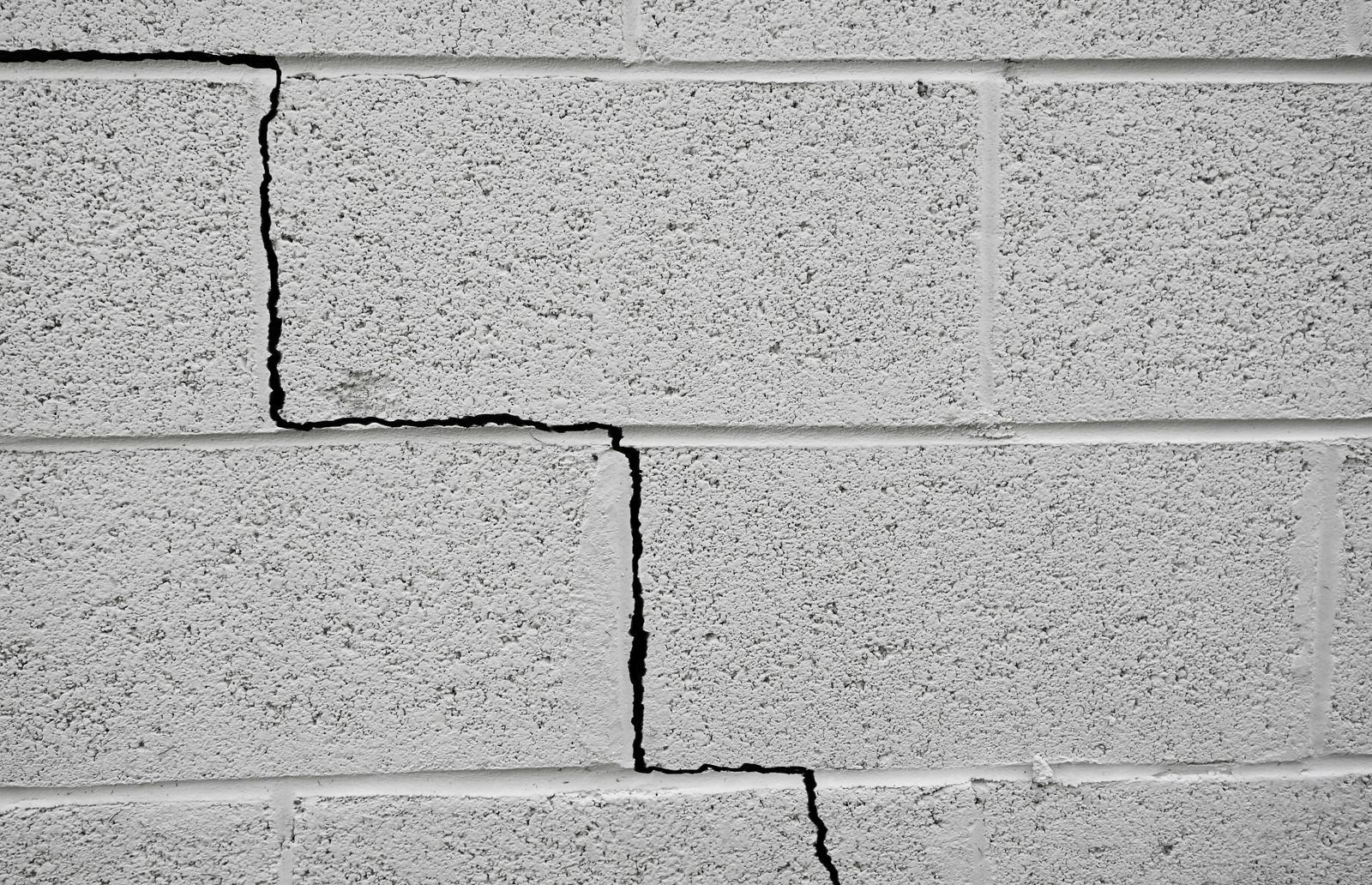
In concrete block or brick walls, cracks like to follow the mortar joints, stepping up or across in a staircase pattern. A tight stair-step can be minor. A wide one, or one where the wall is also leaning or the blocks are sliding out of line, points to settlement or sideways soil pressure. Where the crack is widest tells you which way the wall is heading.
Horizontal cracks
A crack running straight across the wall, roughly parallel to the floor and often near the middle or the top, is the one that gets our full attention. Horizontal cracks are the classic sign that soil and water pressure is pushing the wall inward faster than it can resist. They usually travel with bowing, bulging, or a wall that's starting to tip. Of all the foundation crack types, this is the pattern most likely to need prompt structural help.
Floor and slab cracks
Thin cracks in a basement floor or slab are common and often cosmetic, since the slab isn't holding up the house. But a slab crack with one side sitting higher than the other, or one that keeps widening, can hint at soil moving underneath. That one's worth a look.
TIP: Track a crack instead of trusting your memory. Mark each end with a dated pencil line, or bridge it with a strip of painter's tape, and note the width with a coin or a business card for scale. Snap a photo every season. If it hasn't budged in a year, that's reassuring evidence. If the tape tears or the marks drift apart, you've caught real movement early, which is exactly when it's easiest to deal with.
Cosmetic vs. Structural: The Signs That Separate Them
A single crack in isolation is only half the story. What separates a cosmetic line from a real warning is the company it keeps and how it behaves over time.
Cracks that lean cosmetic tend to be narrow, vertical, steady year over year, and alone. The wall stays flat and plumb, the nearby doors and windows still work, and the floor overhead is still level. These are the ones you can seal to keep water out and otherwise stop thinking about.
Cracks that lean structural usually show up with friends. Watch for a wall that bows or bulges instead of standing flat, gaps opening where the wall meets the floor or ceiling, doors and windows that suddenly stick or show daylight at a corner, sloping or bouncy floors above, and cracks that keep widening rather than holding still. Moisture is another tell. A crack that leaks during every rain is letting water and pressure keep working on the foundation, and water is the engine behind most serious foundation problems around here.
Width matters too. Once a crack passes roughly a quarter inch, or you can see light or feel a draft through it, it has earned a professional look no matter which direction it runs. Movement you can measure is movement worth understanding.
What a Professional Evaluation Actually Looks At
When we come out for a foundation assessment, the crack is only the starting point. We check whether the wall is still plumb or has started to lean, measure how far it may have bowed, and hunt for the supporting evidence around the house: floor levels, how the doors and windows operate, gaps at the sill, and moisture patterns that show where water is sneaking in. We trace the drainage to understand what's loading the foundation, because the cause outside almost always explains the crack inside.
That fuller view is what separates a real diagnosis from a guess. Two cracks that look identical in a photo can call for completely different answers once you factor in wall movement, soil behavior, and water. It's also why sealing a crack from the inside without knowing why it formed can bury a problem that keeps advancing behind the patch. The point of an evaluation is to match the fix to the actual force at work, whether that's stabilizing a bowing wall, addressing settlement, or correcting the drainage feeding the whole thing.
Frequently Asked Questions
Are hairline foundation cracks something to worry about?
Usually not. Thin, vertical hairline cracks in a poured wall most often come from concrete shrinking as it cures. Watch them, seal them if they let water in, and escalate only if one widens or worsens.
Which foundation crack type is the most serious?
Horizontal cracks. One running straight across the wall usually means soil and water pressure is pushing it inward, often alongside bowing. Because that pressure builds with each freeze-thaw cycle, a horizontal crack deserves prompt professional attention.
How can I tell if a crack is getting worse?
Mark both ends with a dated line, note the width using a coin for scale, then check and photograph each season. If the marks pull apart, it's active. A crack that stays put for a year reassures.
Why do foundation cracks seem worse in spring around here?
Spring rain saturates the clay-heavy soils common in south-central Indiana. Wet clay expands and presses harder against foundation walls, so pressure-driven cracks open up. Late-summer drying then shrinks soil, widening settlement cracks from the other direction.
Should I seal a foundation crack myself?
You can seal a stable hairline crack to keep water out. The risk is sealing over a moving crack, which hides the warning sign while the cause works underneath. If it's growing or leaking, get it evaluated first.
Does a foundation crack always mean my house is sinking?
No. Many cracks come from curing concrete or minor finished settling with no structural risk. Sinking shows as widening diagonal or stair-step cracks with sloping floors and stuck doors. The pattern, not the crack alone, tells you.
What Your Crack Is Really Telling You
A crack in the foundation is worth understanding, not fearing. Most are the quiet record of concrete aging or ground that shifted once and then settled down, and they will sit there harmlessly for the life of the house. The ones that matter give themselves away through their shape, their width, and the company they keep, and they get easier to read the moment you start paying attention. Stable, thin, and alone? Monitor it and carry on. Horizontal, widening, leaking, or traveling with a bowing wall and sticking doors? It is telling you something.
With 14
years of experience, Reliant Foundation Solutions / Basement Waterproofing
has helped homeowners throughout Columbus, Indiana, distinguish between ordinary foundation changes and conditions that require professional attention. Every home settles differently, making careful evaluation an important first step before deciding on repairs. Understanding the pattern, location, and progression of
foundation cracks
provides a clearer picture of your home's structural condition and supports informed decisions that help protect its long-term stability and value.