Interior Drain Tile vs. Exterior Waterproofing: Which System Actually Fixes the Source?
June 20, 2026

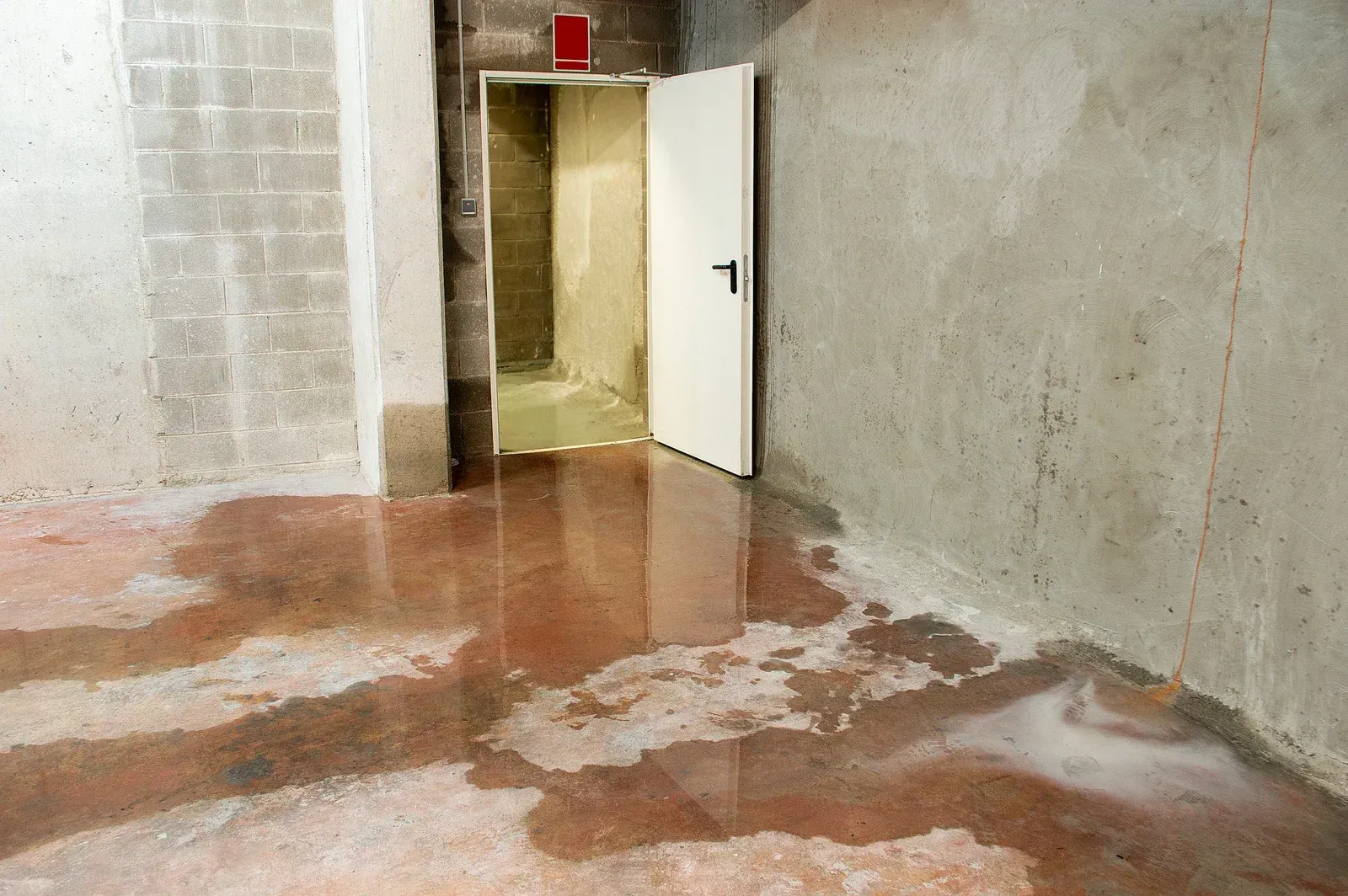
You went downstairs after a rainy week and found water sitting against the base of your foundation wall. Maybe it was a thin film. Maybe it was a puddle wide enough to ruin the boxes stacked in the corner. Either way, you are now searching for a real answer, not a sales pitch about which waterproofing system is better. After working on foundations across south-central Indiana for years, we can tell you that the question is not really "interior or exterior." The real question is: where is the water coming from and what does it do once it gets into your wall assembly? Answer that correctly and the right system becomes obvious. Get it wrong and you will spend money on a solution that manages a symptom while the actual source keeps working against your foundation.
The two systems work on completely different principles. Interior drain tile intercepts water that has already entered your wall or floor system and redirects it before it causes damage. Exterior waterproofing stops water before it ever contacts your foundation. One manages water movement. The other blocks it. Understanding that difference is the only way to make a decision that holds up over time.
How Water Actually Gets Into Your Basement
Most homeowners assume water comes straight through the wall like it soaks through a sponge. In reality, the majority of basement water infiltration in Indiana happens at the cove joint, which is where your foundation wall meets the footing. Hydrostatic pressure builds in the surrounding soil, and water follows the path of least resistance. That joint is almost always the weakest point.
Secondary entry points include wall cracks from lateral soil pressure or settlement, window well failures, and deteriorated parge coats on block foundations. Columbus and the surrounding Bartholomew County area sit on a combination of clay-heavy soils and glacial till that holds moisture for extended periods after rain. That soil does not drain freely. It stores water against your foundation wall and sustains hydrostatic pressure long after the rain stops. A home in this region can experience active pressure for 48 to 72 hours following a significant rain event, even with no additional precipitation.
TIP: Before calling anyone, go to your basement during or immediately after heavy rain and watch where water first appears. If it comes up through the floor or at the base of the wall, hydrostatic pressure from below is the driver. If it comes through a crack or block joint mid-wall, surface or lateral water is more likely the source. That observation will save you from buying the wrong system.
What Interior Drain Tile Actually Does
Interior drain tile, also called a French drain system or perimeter drainage system, is installed at the base of your foundation wall on the interior side. We remove a section of the concrete floor along the perimeter, excavate down to the footing, and install a perforated pipe in a bed of clean gravel. That pipe collects water that migrates through the wall or comes up through the cove joint and routes it to a sump pit where a pump discharges it away from the structure.
This system does not stop water from entering your wall. It collects it before it spreads across your floor. For homes with chronic hydrostatic pressure driven by high clay content soils, interior drain tile paired with a properly sized sump pump is often the most reliable long-term solution. The soil conditions in Bartholomew County make this a relevant option for a significant percentage of older homes, particularly those built before 1980 on block foundations where exterior membrane waterproofing was rarely applied.
The realistic service life of a properly installed interior system with a quality sump pump is 20 to 30 years, provided the discharge line is maintained and the pump is tested annually.
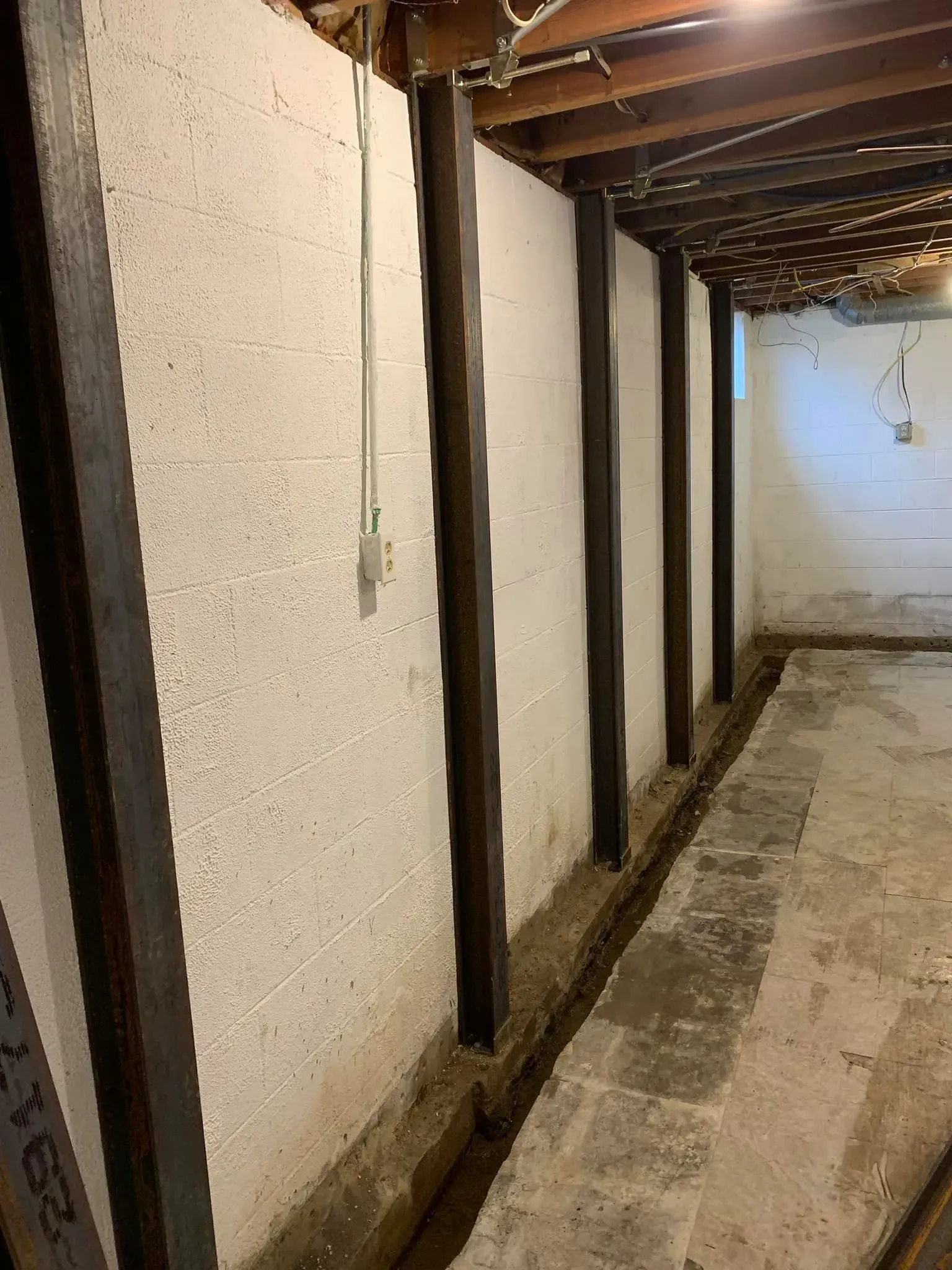
WARNING: If you have a finished basement and you are considering treating water intrusion yourself by patching wall cracks with hydraulic cement, stop. Hydraulic cement can redirect pressure to adjacent weak points and cause larger structural cracks. If your block or poured wall shows a horizontal crack anywhere between 18 and 36 inches from the floor, that is a sign of lateral soil pressure and requires a structural evaluation before any waterproofing work begins. A crack in that location is not a waterproofing problem alone.
What Exterior Waterproofing Addresses
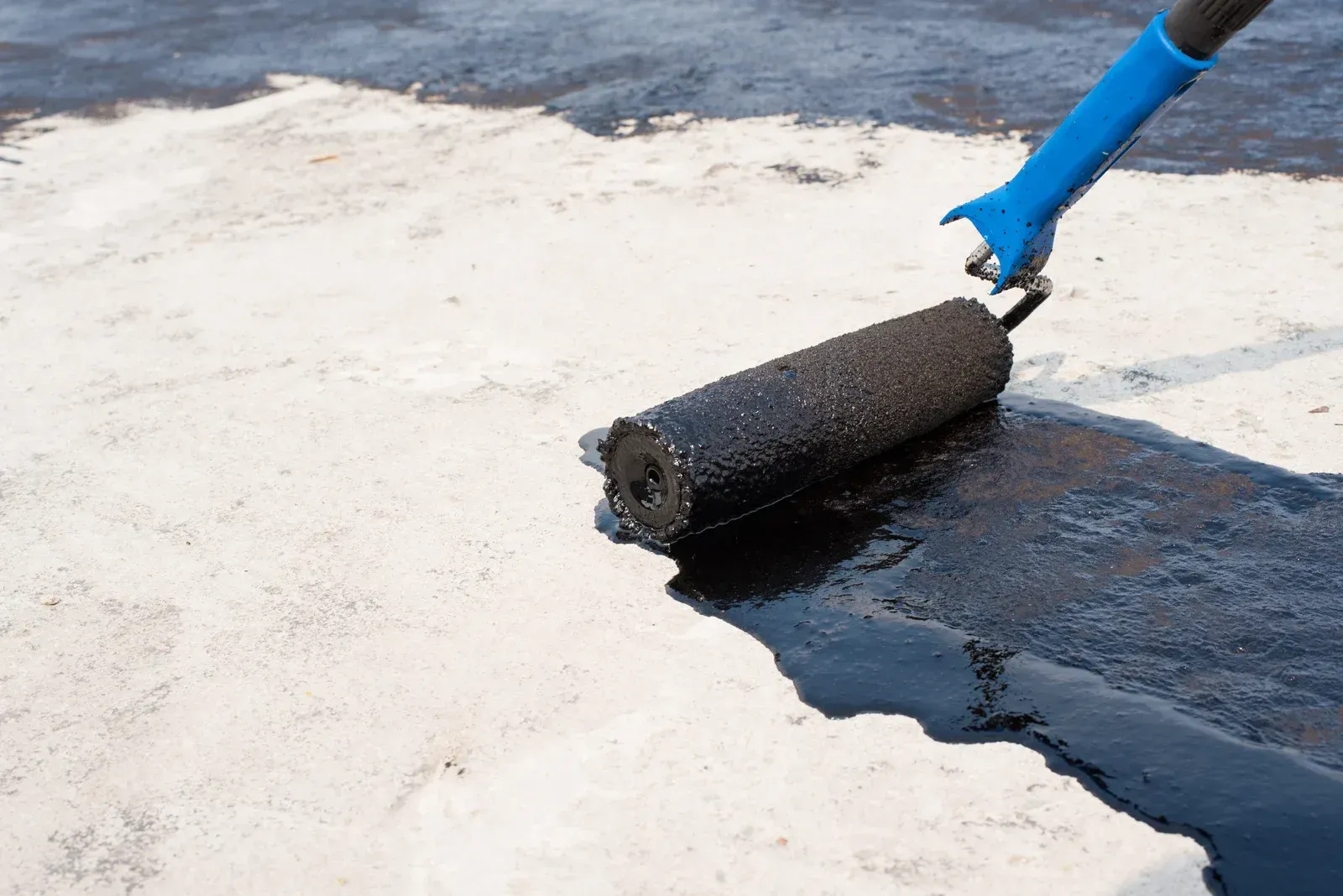
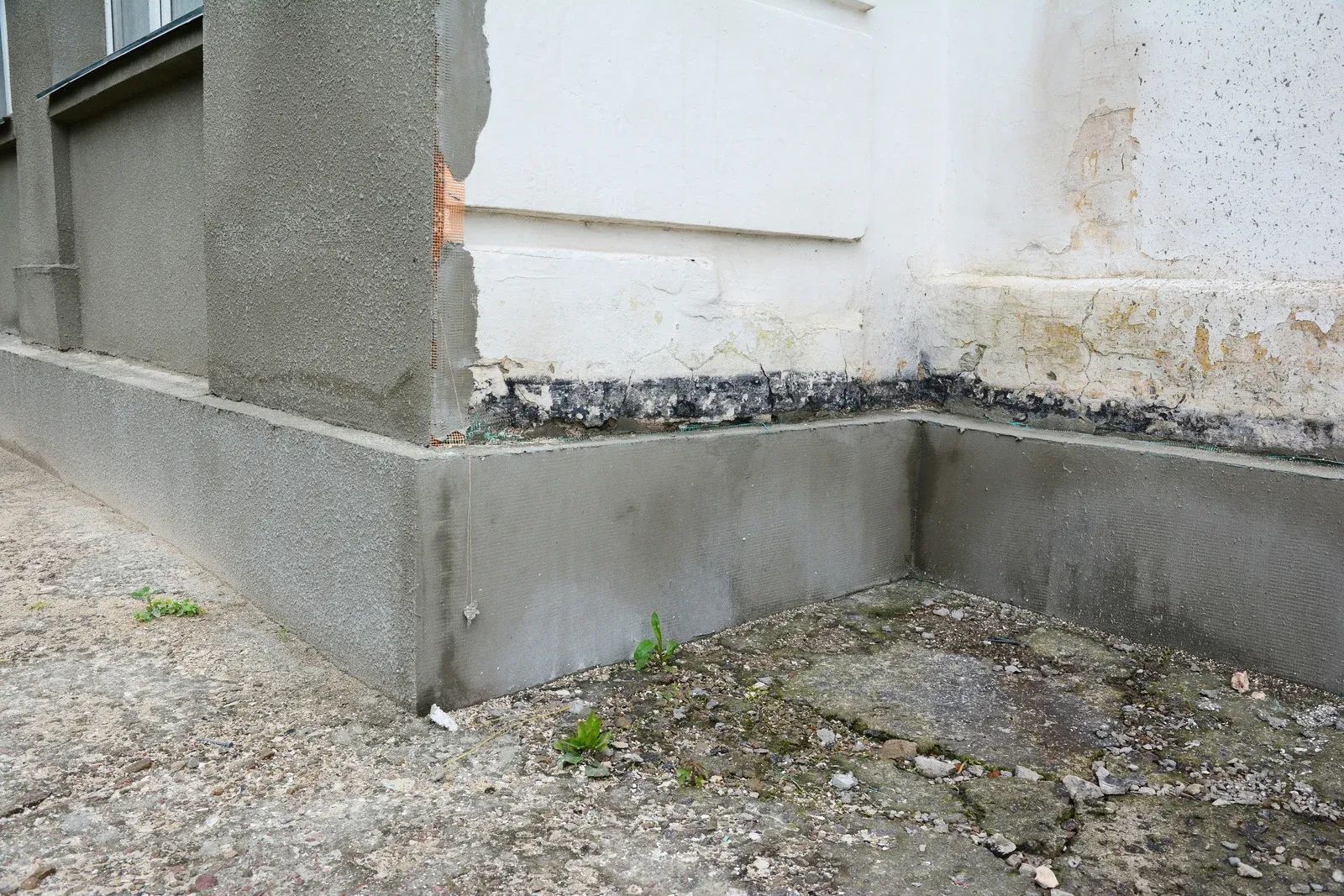
Exterior waterproofing addresses the source directly. We excavate down to the footing, clean the wall surface, apply a membrane or coating system rated for below-grade use, install a drainage board to direct water downward, and backfill with clean drainage aggregate. In cases where the original drain tile around the footing has failed or was never installed, we replace or add it at the same time.
This approach is the most complete solution available because it removes water from the wall assembly entirely. The wall never gets wet. That matters most for homes where water is actively causing spalling on block foundations, efflorescence buildup, or mold growth inside the wall cavities of a finished space.
The tradeoff is access and scope. Exterior excavation around a full foundation perimeter is a significant project. Landscaping, decks, walkways, downspout connections, and utility lines all have to be addressed. In many Columbus-area homes where mature trees and established landscaping sit close to the foundation, partial exterior work targeting a specific wall is often a more practical approach than a full perimeter excavation.
Comparing the Two Systems Directly
| Factor | Interior Drain Tile | Exterior Waterproofing |
|---|---|---|
| Stops water at the source | No | Yes |
| Manages active hydrostatic pressure | Yes | Yes |
| Disruption to landscaping | None | Significant |
| Interior disruption | Moderate (floor removal) | Minimal |
| Best for block foundations | Yes | Yes |
| Best for severe wall damage | Not alone | Yes |
| Addresses footing-level entry | Yes | Yes |
| Typical service life | 20 to 30 years | 20 to 25 years with proper membrane |
| Requires sump pump | Yes | Yes |
Neither system is universally superior. The right choice depends on your wall condition, soil drainage, the extent of water intrusion, and whether you have interior finishes you want to protect. On service calls, we frequently find homes in Columbus and Seymour where the correct answer is a combination approach: exterior membrane on the most affected wall section and interior drain tile completing the perimeter.
What a Professional Inspection Covers
A proper foundation water intrusion assessment takes 45 to 90 minutes and follows a specific sequence. We start outside, checking grade slope, gutter discharge points, downspout extensions, and window well drainage. Water often gets attributed to hydrostatic pressure when the actual driver is surface water pooling against the foundation because the grade pitches inward.
Inside, we inspect the full perimeter for efflorescence (white mineral deposits that indicate long-term water migration), active wet areas, staining patterns above and below grade, and any visible cracking. The location and orientation of cracks tells us whether the issue is settlement, lateral pressure, or shrinkage. We test the existing sump system if one is present, check the discharge line for blockages, and note whether the pump activates at the correct water level.
After inspecting hundreds of Indiana basements, we can say that about 40 percent of homes we visit have a grading or drainage issue contributing to the problem that could be corrected before any interior or exterior system is installed.
Experienced Foundation Specialists Protecting Homes With Confidence
The most expensive waterproofing decision you can make is choosing a system before you understand what is actually driving the water. Interior drain tile solves chronic hydrostatic pressure efficiently. Exterior waterproofing addresses source-level intrusion and wall damage. Both are valid, and in many Columbus-area homes, both play a role in a complete solution.
At Reliant Foundation Solutions / Basement Waterproofing, we have been diagnosing and correcting foundation water problems across Columbus, Indiana and the surrounding areas for 14
years. If your basement is showing moisture, we can walk through a complete assessment and give you a straight answer about which system fits your specific situation.
Frequently Asked Questions
Can I install interior drain tile myself to save on the project?
Interior drain tile requires breaking concrete, excavating to footing depth, and sloping perforated pipe correctly toward a sump pit. Without proper equipment, the pipe will not drain, creating standing water under your slab. Mold follows quickly. This project has no acceptable middle ground between done right and done wrong.
How do I know if my existing drain tile around the footing has failed?
Pre-1990 footing drain tile in Indiana was clay or concrete pipe with open joints that close over time from soil migration and root intrusion. If your basement takes on water seasonally despite no visible cracks and good exterior grade, failed original drain tile is very likely the cause.
Does exterior waterproofing come with a warranty that transfers to a new owner?
Transferable warranties vary significantly by contractor and membrane product. Always confirm whether coverage includes labor or membrane material only. A membrane-only warranty offers limited value when excavation is required to access a failure. Get the full warranty terms in writing and verify transfer conditions before any work begins.
Is Columbus, Indiana soil particularly hard on foundations?
Yes. Heavy clay glacial soils throughout Bartholomew County expand when saturated and contract sharply in dry summers. That seasonal cycle stresses foundation walls and cove joints over decades. Homes built on block foundations before 1980 were not engineered for that movement, which is why cove joint infiltration rates run higher here.
What happens if I ignore a wet basement for another season?
Water carries dissolved minerals that degrade mortar joints in block foundations and widen cracks in poured walls over time. Within two to three seasons, a straightforward waterproofing project can grow to include structural repair. Once wall deterioration reaches that point, the scope of work increases significantly before any waterproofing system can be installed.